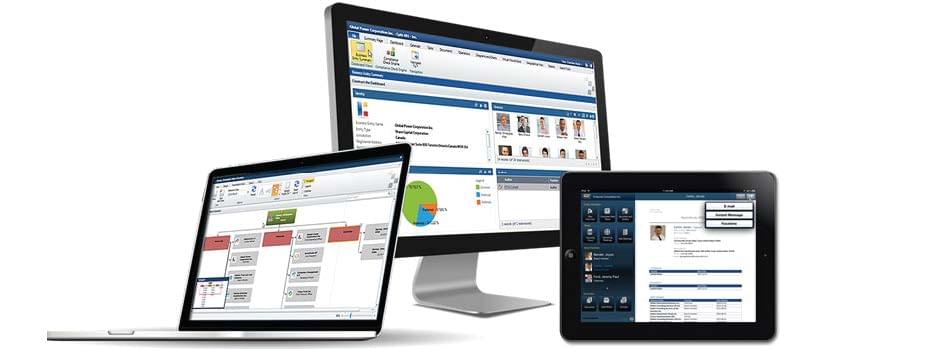
The Essence of a Modern Entity Management Software System
Entity management has evolved into a complex and demanding discipline for multinational corporations operating across diverse jurisdictions. Modern entity management systems extend far beyond basic corporate record-keeping, encompassing comprehensive subsidiary governance frameworks, regulatory compliance automation, and strategic corporate governance initiatives that ensure sustainable operations across an organization's global business entities.
As regulatory compliance requirements become increasingly complex across different jurisdictions, advanced entity management technology serves as the foundation for enterprise-wide governance solutions. Modern entity management platforms enable organizations to streamline critical corporate governance functions while maintaining consistent compliance standards and reducing operational risk across their global subsidiary network.
Comprehensive Entity Management: Foundation for Corporate Governance Excellence
Today's Corporate Secretaries, legal professionals, governance teams, compliance officers, and finance departments require sophisticated technology platforms to collaborate effectively and meet complex entity management requirements. Organizations can choose between generic software solutions or purpose-built entity management systems that incorporate proven subsidiary governance best practices and regulatory compliance frameworks.
An organization's entity management requirements, combined with its commitment to maintaining enterprise-wide subsidiary governance and regulatory compliance, will determine whether to implement a comprehensive entity management platform versus relying on basic tools such as spreadsheets, legacy databases, or internally developed systems that lack scalability and security.
Corporate Secretaries responsible for implementing subsidiary governance best practices may not fully understand the operational efficiencies, risk mitigation capabilities, and compliance automation benefits that comprehensive entity management systems deliver. This guide assists Corporate Secretaries and governance professionals in evaluating the essential characteristics of robust, modern entity management platforms.
Consider these five factors when evaluating the effectiveness and long-term success of a potential entity management system.
1An entity management system that adapts globally
Entity management is conducted for global subsidiaries, so deploying a solution that adapts to jurisdiction-specific legal entity types, requirements, terminologies, policies and procedures is another prerequisite for corporations that operate internationally. This will help facilitate the tracking and management of entity information in a structured, accurate and jurisdiction-compliant fashion. Two necessary points in determining the global reach of an entity management system are (1) legal entity types and (2) accurate terminology.
Organizations with a global presence need to ensure their global entity management database contains a comprehensive library of legal entity types specific to each jurisdiction along with the ability to easily add new legal entity types on an as-needed basis.
Additionally, the entity management system’s ability to contextually reference accurate terminologies that may be unique to a legal entity type and its jurisdiction of operation (i.e. stocks vs. units, directors vs. partners, minute book vs. statutory records, etc.) will improve data accuracy and entity information communication.
2A rich interface: the ultimate recipe against the tedium of maintaining data
A well-designed and user-friendly interface is a prerequisite to user adoption of an entity management system or any enterprise software. Entity management systems lacking a well-thought-out and intuitive design will likely produce greater inefficiencies and result in weak user adoption – irrespective of other features a system might offer.
Ease-of-use is a system characteristic that is difficult to evaluate using product brochures or documentations. Only an in-depth solution demo of a corporate entity management system can help verify claims that a particular solution is in fact “easy to use”. Being mindful of a solution’s ease of navigation and assessing how dynamic the platform is when attending an entity management system demo is critical. Moreover, the presence of workflows is core to helping ensure effective and efficient user adoption.
By leveraging an entity management system’s workflow capability to automate, streamline and organize routine legal entity governance and compliance operations, such as the creation of a new business entity, organizations are able to simplify the user experience as well as minimize the individual (and collective) effort/time required from various user groups tasked with maintaining this information.
3One centralized entity management database
Utilizing one centralized database is essential when subsidiary information is maintained by various corporate departments that may also be geographically dispersed. By helping circumvent pitfalls arising from “siloed” systems or databases such as data duplication, a centralized entity management database allows for best practice data management and governance. It promotes consistent, accurate and complete reporting across all group subsidiaries for a comprehensive view of an organization’s global operations.
Through robust internal controls, a company-wide entity management database must offer granular administrative control over the information (topics, fields, documents, etc.) a user is able to access. Strict permissions that clearly parameterize a users’ ability to view, create, edit and delete data are foundational to ensuring data integrity, security and compliant access to information across different business units.
In parallel, encouraging data-driven decision making across the organization requires powerful reporting capabilities. Capitalizing on the information held within one centralized database to generate complete and accurate reports help ensures management is presented with the necessary information/data to accurately assess legal, compliance and governance issues impacting the group as a whole or an individual subsidiary.
4“Out-of-the-box” flexibility
Selecting a system that adapts and automates company or department specific processes is of paramount importance since such processes and requirements vary from one organization to another. Formulating a clear understanding of an organization’s entity management and subsidiary governance objectives will go a long way in ensuring the right system is selected.
Maintaining a long-term view when assessing these objectives can also guarantee the selected solution will successfully integrate and automate future subsidiary governance and compliance goals as they arise. To better evaluate an entity management system’s configurability and flexibility, considering the system’s ability to store and manage company data through the creation of custom field types is a principal indicator of its adaptability to unique corporate needs. Paired with its ability to report on such custom fields -- similar to preset or out-of-the-box ones -- legal, compliance and governance professionals are able to easily access key data in a timely and effective manner.
Selecting a technologically advanced solution capable of remaining current for many years following its implementation through continuous updates and upgrades is key, yet often overlooked. Systems founded on outdated technology fail to keep pace with technological advancements and are ‘siloed’ within a corporation’s ecosystem of software applications.
5Seamless Integration and Interoperability with Enterprise Systems
Sound legal entity management and subsidiary governance necessitates cross-departmental collaboration as legal, company secretarial, compliance, governance and tax/finance business units work together to track and manage a broad range of business entity and corporate information.
To permit this level of collaboration in an efficient, automated and systematic manner, a legal entity management system should include a robust Application Programming Interface (API) that allows it to exchange information with other internal enterprise solutions such as Finance & Accounting, HR or Master Data Management (MDM) Systems. Essentially, APIs represent the agreed upon language/code systems use to communicate with one another – a key building block to interoperability.
Consequently, when system interoperability is present the need for double entry of information or periodic (manual) data transfers is eliminated as systems automatically exchange the required information with no end-user interference – a benefit that promotes greater data integrity, accuracy and timeliness, as well as insightful real-time decision-making.
Selecting the Right Entity Management System for Your Organization
While numerous functional and technical requirements influence entity management system selection for multinational organizations, these five foundational characteristics ensure successful implementation of a platform capable of adapting to unique corporate governance needs. Today's leading entity management and governance solutions provide organizations with the robustness, scalability, and flexibility necessary to meet evolving regulatory requirements and internal governance standards that legacy systems and generic software platforms cannot adequately address.

To learn more about Corporatek’s Global Entity Management and Corporate Governance Software Systems, you can
 Contact Us
 Download a Facts e-Booklet
 Request a Demo